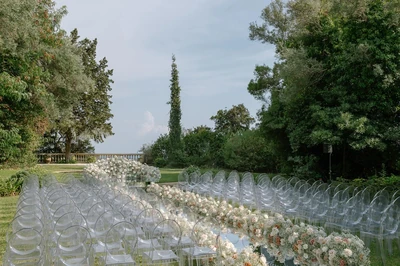
An estate wedding in Chania can give the day a lovely sense of place: a chapel among olive trees, drinks in a courtyard and dinner beside old stone walls. Making that setting work means looking beyond the overall guest limit. The ceremony, seated meal, party and weather alternative each need their own plan.
Our Chania wedding venue guide introduces Metohi Istoria, Markakis Estate, Dourakis Winery and Avra Imperial. This guide looks more closely at the estate decision: what the published space descriptions tell you, what belongs in a proposal and how to build an evening that fits the venue.
Read the capacity as a series of layouts
Metohi Istoria publishes capacity for up to 150 guests outdoors and up to 60 in its indoor oil mill. For a larger group, moving everyone inside is not a complete weather plan. Ask the venue to show an alternative that accommodates your actual guest list, the meal service and the equipment needed.
Markakis Estate describes 70 seated guests at the chapel square and up to 100 in the main event square, alongside a headline figure of 120. Ask which arrangement that larger number describes. A useful proposal should make the ceremony seats, dinner places and dancing area visible rather than leaving you to infer them from one maximum.
Build the count carefully. Include children who need seats, high chairs, space for anyone with an access requirement and supplier meals where relevant. Ask whether those people are included in the quoted capacity. A drawn layout can reveal a tight aisle or a table that needs moving before the party starts.
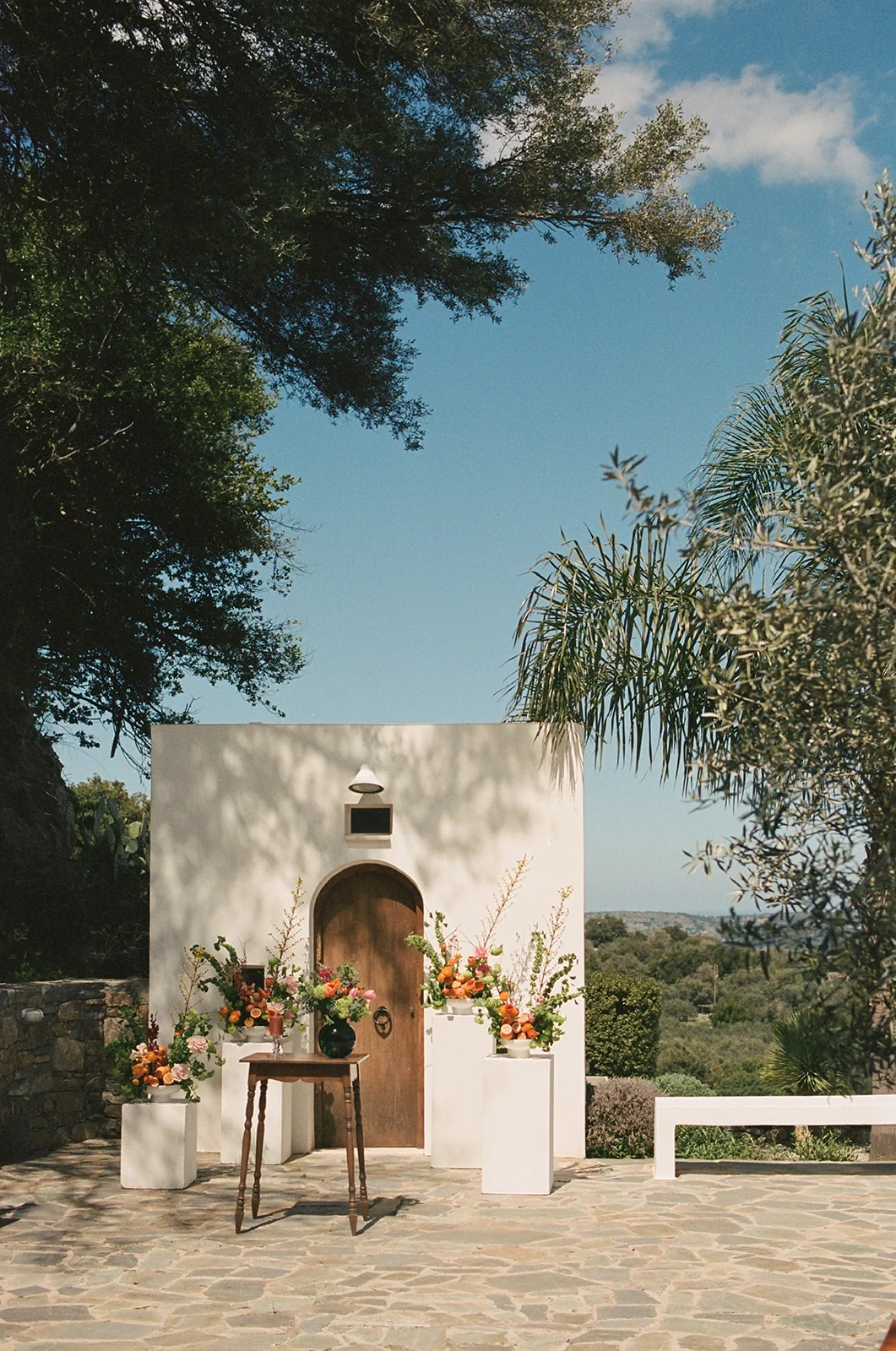
The chapel prepared for Lauren and Caroline’s wedding at Markakis Estate. Confirm ceremony seating separately from the reception layout.
Follow the guests through the property
Imagine arriving in formal clothes, finding a seat, reaching the bar and moving to dinner. Ask about the surfaces, level changes, toilets and lighting along that route. Check the approach with the people who will use it: a route that looks charming in photographs may need assistance or a different arrangement for some guests.
At an estate with several areas, establish what happens while a space changes use. If ceremony chairs become dinner chairs, who moves them, when, and where do guests go in the meantime? If photographs take you away from the group, give someone responsibility for welcoming guests to the next part of the day.
Shade, water and somewhere to sit matter between the formal moments too. Put them in the plan for the welcome, family photographs and any wait before dinner. Keep the access route clear when florals, a bar or entertainment equipment are added.
Ask who supplies the working parts of dinner
Markakis describes infrastructure for hired catering, bar and DJ services. That is a useful starting point for a supplier conversation, rather than a list of everything included in the hire. Ask the venue which suppliers may work there and give each the same layout, guest count and running order.
Have the caterer explain where food is prepared or finished, how service reaches the tables and what equipment they bring. Clarify furniture, crockery, glassware, linens, refrigeration, water, power, staff, clearing and collection. These are questions to resolve in the offer, not assumptions that every estate is missing or includes the same items.
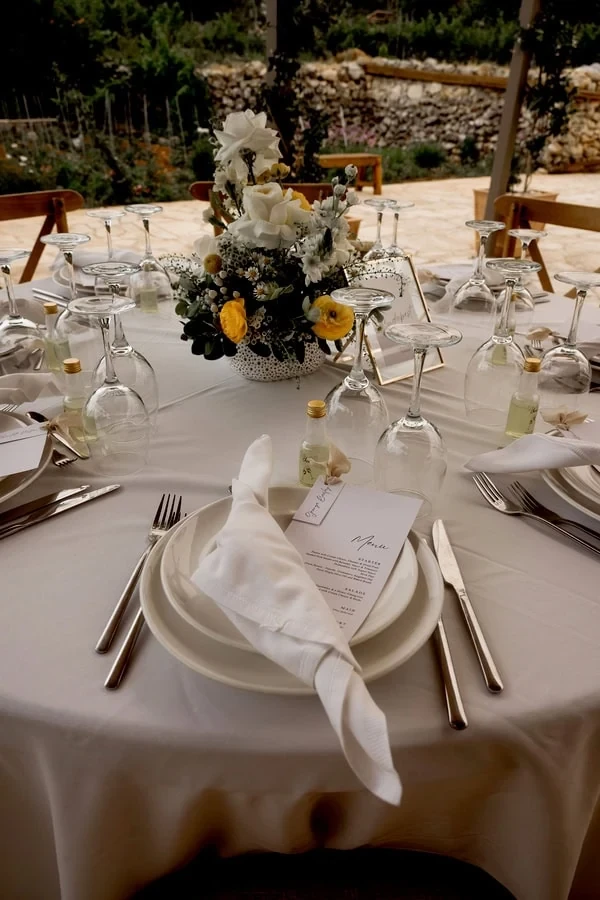
A table from Ellie and Lewis’s Dourakis Winery wedding. The place settings are one part of the wider food and service arrangement.
If you are comparing an estate with Dourakis Winery, request a wedding proposal for the particular event spaces. A tasting experience does not establish wedding catering, private use or event capacity. Compare the actual inclusions in the two proposals, with the same dinner format and bar duration.
Build the evening backwards from the finish
Metohi’s published terms distinguish live music until 22:30 from outdoor DJ music, whose volume is lowered after 23:00. The stated close is midnight; an extension to 02:00 is available only by request and subject to conditions. Treat this as a venue-specific conversation, not a general Chania rule or a guaranteed late finish.
Once the venue confirms your arrangement, work backwards from the final pickup. Allow realistic time for dancing, speeches, meal service, drinks and the ceremony. Ask the caterer how the chosen menu affects service time. Tell the musicians or DJ about the agreed sound arrangements before confirming their booking.
A change in music level need not feel abrupt if the evening is designed around it. Discuss where guests gather later, what service continues and when suppliers need to stop or collect equipment. Agree the host or coordinator who communicates transitions on the day, so the couple does not become the point of contact for every adjustment.
Make the weather alternative a complete event
A partially covered square or a small indoor room may be useful without accommodating your entire plan. Ask to see where the ceremony, dinner, catering and entertainment would go in the alternative layout. Include the walking routes and arrival point, not just the tables.
Review wind exposure, secure installation of decoration and equipment, ground conditions, shade and drinking water with the venue and suppliers. Establish who decides on a change, the latest decision time, the setup lead time and any extra cost. Keep the revised plan with the original so everyone works from the same version.
Separate the estate stay from the wedding booking
Markakis has two lodging units for a small core group. Ask how these connect with event hire, including preparation access, check-in and the following morning. Allocate the rooms deliberately before recommending accommodation to the wider guest list. An estate’s event capacity says nothing about how many people can sleep there.
For an on-site chapel, confirm the ceremony type separately. Booking a space does not itself establish a civil or religious marriage arrangement. Check the responsible authority or celebrant for the exact venue and your circumstances before fixing appointments or travel around the ceremony.
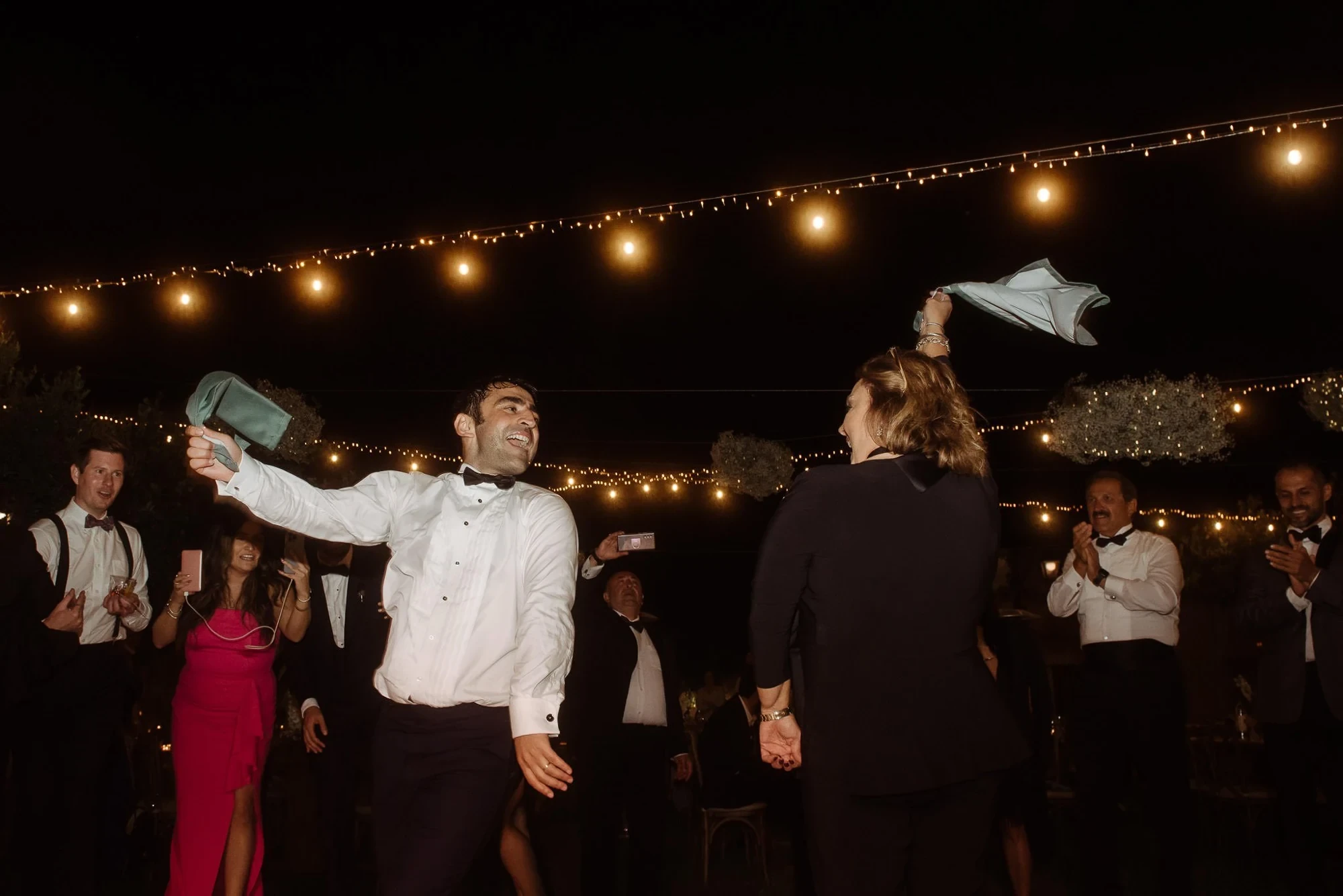
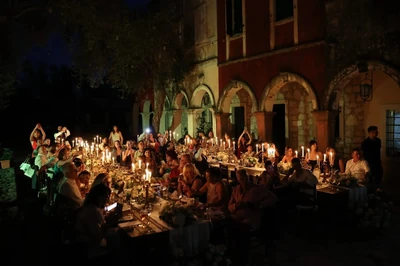
Garik and Brandon’s evening at Metohi Istoria. Plan the transitions so there is time to enjoy the celebration.
Bring the final brief together in one dated document: the guest count, spaces, layouts, hire period, suppliers, weather alternative, payment schedule and person coordinating the day. Confirm what is included, what is optional and who is responsible for each handover. Then connect it to the accommodation and pickups using our guide to where guests should stay for a Chania wedding.
If you would like support turning a few favourite settings into comparable offers, share your Chania plans with our Concierge team.